


Engine Oil Analysis of Performance Oils tested in the 2023 Civic Type R (FL5)

Updated: Jul 31, 2025
Article by Jiachen Yan. Sponsored by FSE LA.
Introduction
The Importance of Engine Oil
Engine oil is the lifeblood of any vehicle's engine, whether for daily driving or aggressive track use. Its primary role is to lubricate moving parts, reducing friction and preventing metal-to-metal contact that causes wear. Oil also carries heat away from critical engine components, such as pistons, bearings, and valve trains. Furthermore, most engine oil contains detergents and dispersants to keep the engine clean by suspending sludge and soot, as well as anti-wear additives to protect surfaces under extreme pressure.
In high-performance scenarios, such as track driving, the engine operates at significantly higher loads and temperatures than in daily commuting. Under this scenario, engine oil must resist thermal breakdown, oxidation, and viscosity loss to maintain a protective film even after repeated flying laps. For this reason, performance oils often differ from standard OEM oils by including advanced additive packages and using base oils with superior thermal stability. As a track-day enthusiast, selecting the right oil is crucial for the engine's longevity.
My background
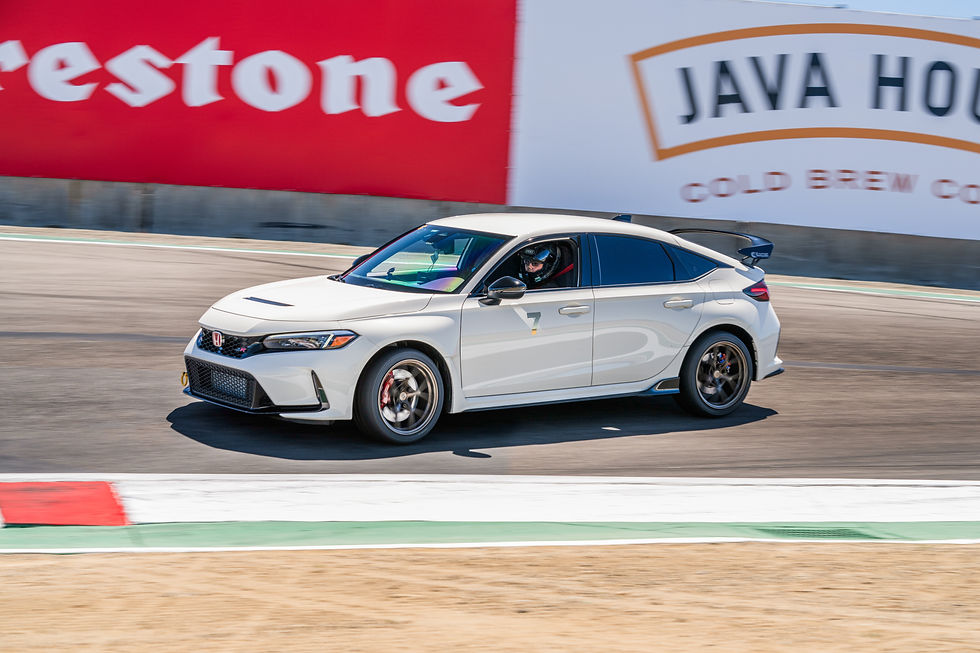
I purchased my 2023 Honda Civic Type R FL5 (K20C1) in April 2024 with just 7 miles on the odometer. After a careful break-in period of approximately 500 miles, which included local driving and a few road trips, I performed my first oil change at 2,586 miles with Ocean SJC Honda, switching out the factory fill for Honda Ultimate 0W-20.
However, given the Southern California climate, where summer temperatures consistently exceed 90°F, and considering the front-wheel-drive engine bay design, as well as the turbocharged K20C1 engine's higher heat load, I became concerned that Honda's Ultimate 0W-20 might not provide sufficient protection during repeated track sessions. I decided to conduct this oil analysis project to compare various high-performance oils, including those marketed to track-day enthusiasts and professional race teams.
The Purpose of This Oil Test
Track-day enthusiasts, also known as "weekend warriors," often drive their cars to the track, race hard, and then drive back home. It's a real-world usage scenario that involves highway cruising, aggressive track laps, and street driving all on one oil change. Some recommend changing oil after every track day to mitigate wear, fuel dilution, and thermal degradation. Others say 2-3 track days are sufficient before an oil change, while a few would only change their oil at the manufacturer's recommended interval, even after racing on hot asphalt, or still use the manufacturer’s recommended 0w-20 on a 100°F track day.
For this project, I sampled each oil after approximately 750 miles of mixed use, and after extended use on certain oils that outperformed others in the 750-mile test:
Street and highway driving to the track
Multiple track laps during the event
Highway and city driving back home
This test simulates typical usage for track enthusiasts while providing data on how various performance oils withstand real-world abuse.
Methods
Blackstone Laboratories: Where I received my Oil Analysis
To analyze the used oil samples, I sent them to Blackstone Laboratories in a container provided by the laboratory. Blackstone Laboratories is a respected oil analysis lab known for ASTM-compliant testing. Blackstone provides detailed reports that reveal:
Wear metal from engine parts
Contaminants like dirt, fuel, or coolant
Additive retention to see if oils maintain their protective chemistry
Physical properties such as viscosity, flashpoint, fuel dilution, and insolubles
Blackstone uses standardized ASTM methods such as:
Spectral Exam (D5185): Detects metal wear, contamination, and additives
Viscosity (D445): Checks for oil thinning or thickening
Flashpoint (D92): Flags fuel dilution
Insolubles (D1796): Measures soot and oxidized debris
Their reports include technical explanations alongside data, making them accessible even to enthusiasts without engineering backgrounds.
Oils Tested in This Project
The following brands of engine oil were tested, with some sponsored by FSE LA:
Oil Brand & Type | Viscosity | Mileage Interval | Notes |
Motul 300V Power | 5W-30 | 751 mi | Community gold standard |
J&A RRS Racing | 5W-30 | 749 mi | Sponsored by FSE LA |
Pakelo Racing EVO | 0W-30 | 748 mi | Sponsored by FSE LA |
Kennol Energy | 5W-30 | 679 mi | Non-sponsored |
LiquiMoly Top Tec 4600 | 5W-30 | 738 mi | Sponsored by FSE LA |
Pakelo Krypton XTLA | 5W-30 | 840 mi | Sponsored by FSE LA |
Pakelo Racing EVO (2nd Test) | 0W-30 | 1800 mi | Extended test, 3 track days |
Kennol Energy + | 5W-30 | 1800 mi | Upgraded version of Energy, 3 track days |
Honda Ultimate Synthetic | 0W-20 | 711 mi | Factory Honda full synthetic baseline |
Pakelo Racing EVO (3rd Test) | 0W-30 | 2701 mi | Extended test, 5 track days |
For each oil test, the process included:
Street & Highway Driving to simulate typical use.
Track Driving during track-day events.
Before switching to a new oil brand, I performed an interim oil change using Mobil 1 0W-20 or a Dealership oil change with Honda Ultimate 0W-20 to minimize cross-contamination of materials between brands.
Pakelo Racing EVO 0W-30 was tested three times:
First Test: 748 miles (1 track day)
Second Test: 1800 miles (3 track days)
Third Test: 2701 miles (extended use)
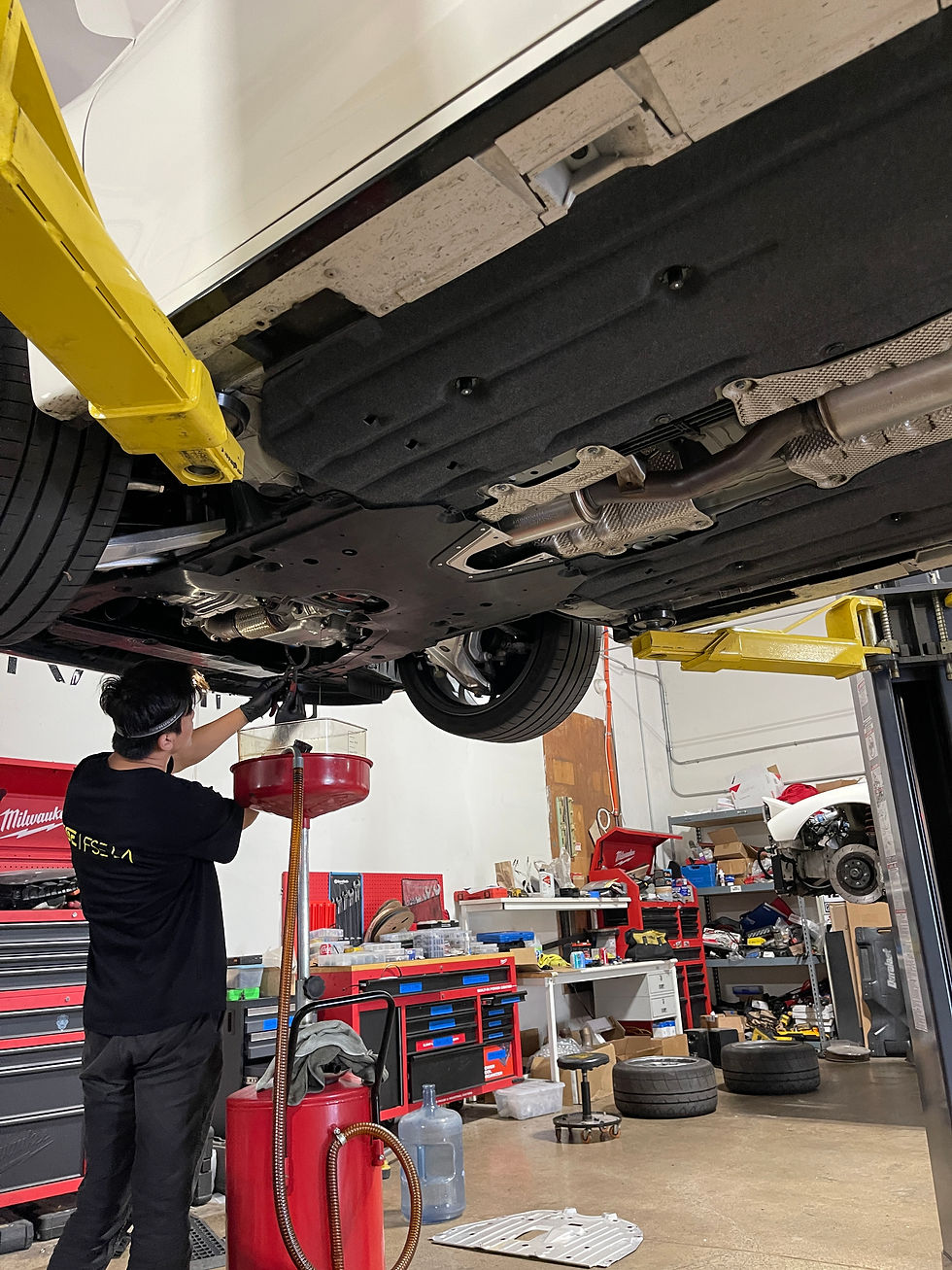
All oil changes were performed at FSE LA under my direct supervision. The oil samples were collected mid-drain, per Blackstone Labs' guidelines, then labeled, sealed, and shipped directly to Blackstone. I manually recorded and organized the results for this report.
Results
Wear Metals Summary
The wear metals results indicate how much material is shedding from engine components during use:
Aluminum: All oils showed normal levels; Pakelo Racing EVO showed slightly elevated aluminum at 748 miles and 1800 miles interval but returned to baseline by 2701 miles, indicating consistent protection. This suggests that any minor increase in wear metals is controlled and does not escalate over time when using Pakelo EVO.

Chromium & Iron: Consistent across samples with no abnormal spikes, indicating stable ring and cylinder wall wear. Pakelo Racing EVO performed on par with other oils in keeping these wear metals within normal ranges, even under extended usage.
Copper, Lead, Tin: All remained within normal ranges, suggesting bearings and bushings remained intact throughout testing. Pakelo Racing EVO did not show any concerning increase in these elements, supporting its long-term bearing protection claims.
Nickel, Silver, Titanium: These metals remained trace or negligible in all samples, indicating no exotic alloy or specialty component wear.
Contaminants Summary
Potassium & Sodium: No significant findings other than LiquiMoly Top Spec, but sodium is likely an additive in the oil itself, since sodium did not show up with excess potassium during that cycle.

Silicon: Levels remained within expectations, confirming air filtration remained effective. Motul 300V’s silicone level is unexpectedly high.
Additives Summary
Molybdenum, Boron: Present in varying amounts depending on brand; Motul 300V and Pakelo Racing Evo showed strong moly content for friction reduction.

Calcium, Magnesium: Detergent levels varied across brands; Pakelo and Motul 300V had high calcium for cleaning.
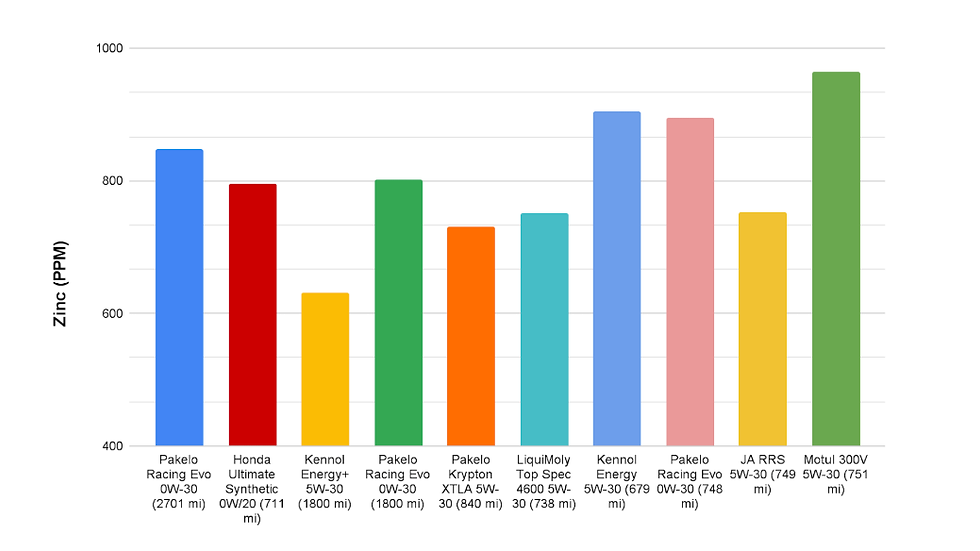
Phosphorus & Zinc: These anti-wear elements were consistent with each oil’s specifications. Motul 300V and Pakelo Racing EVO maintained a stable and high zinc level throughout the entire test period.
Barium: Minimal presence, consistent with modern oil formulations.
Physical and Chemical Properties Summary
Viscosity: Pakelo Krpton XTLA and Racing EVO demonstrated the most stable viscosity profile, retaining high cSt @100°C even after 2701 miles, indicating excellent shear stability.


Flashpoint: Remained stable across all oils, indicating minimal fuel dilution.
Fuel %, Antifreeze %, Water %: All in safe ranges; no significant contamination
detected.
Insolubles %: Stayed within normal limits, confirming oils kept combustion byproducts suspended effectively.
TBN (Total Base Number): Pakelo Racing EVO maintained the highest TBN across all test intervals, reflecting highest additive reserve for acid neutralization, as well as being consistently stable.

Discussion
Based on the updated data, Pakelo Racing EVO 0W-30 clearly outperformed other oils in this test. Despite multiple track days and extended mileage (up to 2701 miles), it maintained:
Highest TBN values, ensuring long-term protection and acid neutralization.
Consistent and robust Molybdenum & zinc levels, providing continuous anti-wear protection.
Superior viscosity retention, resisting breakdown and shear even under track stress.
Controlled wear metals, with stable readings across aluminum, iron, and copper, even over extended use. The small increase in aluminum at mid-interval returned to normal at the longest test duration, demonstrating Pakelo EVO 0w-30 's wear control capability.
Other oils, such as Motul 300V, J&A RRS, and Kennol Energy, also performed well within the 750-mile track-day scenario. However, Pakelo Racing EVO proved to be the most durable option for extended track and street use without compromising engine protection.
Conclusion: Recommended Oils for Track Use
Based on my analysis, the most recommended oil for track-day use is:
1. Pakelo Racing EVO 0W-30
Highest TBN for long-term protection
Stable and high anti-wear additive content (Zinc)
Maintains viscosity even under extreme use
Consistent wear metal control over long intervals
Ideal for extended intervals and multiple track days

Additional Recommendations:
Motul 300V 5W-30 – Excellent short-term track oil, with proven track record.
J&A RRS 5W-30 – Good anti-wear package and solid for weekend warriors.
LiquiMoly Top Tec 4600 5W-30 – Clean-running, effective for mixed use.
Kennol Energy + 5W-30 – Viable long interval oil for balanced performance.
Future Directions
For continued testing, I will consider these oil next:
Red Line High Performance 5W-30
AMSOIL Signature Series 5W-30 or 0W-30
Royal Purple® High Performance Motor Oil 5W-30


Credit:
FSE LA - Irvine, CA
Blackstone Laboratories - Fort Wayne, IN
Supplemental Table: https://docs.google.com/spreadsheets/d/1ELp_qO8Ae3W6xrACNaZrQKixCa1nFAJv2wQIE5sfqwc/edit?usp=sharing


Comments